
How Freshwater Fish Compare at the Table
The six species covered in this guide represent the most commonly caught and cooked freshwater fish in North America. They vary significantly in flavor intensity, texture, fat content, and how forgiving they are to cook. Understanding these differences is the starting point for turning any catch into a great meal.
If you want to know which species ranks best overall as eating fish, our freshwater fish eating guide ranks all six in detail. This guide focuses specifically on how to cook each one well.
| Species | Flavor | Texture | Fat Content | Fillet Difficulty |
|---|---|---|---|---|
| Walleye | Mild, sweet | Firm, flaky | Low | Moderate (Y-bones) |
| Trout | Mild to moderate, nutty | Tender, delicate | Medium | Easy (whole or fillet) |
| Yellow Perch | Mild, slightly sweet | Fine, tender | Low | Easy (small fillets) |
| Pike | Moderate, earthy | Firm, can be dry | Low | Hard (Y-bones) |
| Bluegill | Mild, clean | Tender, fine-grained | Very low | Easy (small fish) |
| Catfish | Moderate, earthy | Dense, meaty | Medium-high | Easy (skin-on or skinned) |
Best Cooking Methods by Species
Not every cooking method suits every fish. This matrix shows at a glance which methods work well for each species, and which are ideal. Use it as a quick reference when you're deciding how to cook what you've got.
| Species | Pan-Fry | Deep-Fry | Bake | Grill | Smoke | Tacos |
|---|---|---|---|---|---|---|
| Walleye | ★ | ★ | ★ | ✓ | – | ★ |
| Trout | ✓ | – | ✓ | ★ | ★ | – |
| Perch | ★ | ★ | ✓ | – | – | ★ |
| Pike | ✓ | – | ✓ | ✓ | ★ | – |
| Bluegill | ★ | ★ | ✓ | – | – | ★ |
| Catfish | ✓ | ★ | ✓ | ✓ | ★ | – |
★ = Ideal method · ✓ = Works well · – = Not recommended
Species Breakdown
Each species below gets its own breakdown covering flavor and texture, the best cooking methods, and specific techniques or tips that make a difference. Where we have dedicated recipes or guides for a species, those are linked.
Walleye is the benchmark for freshwater eating fish — mild, slightly sweet, and completely free of the "muddy" or "fishy" taste that puts people off other species. The flesh is firm enough to hold its shape in a pan or on a grill, but flakes cleanly when cooked through. It has very little fat, which keeps the flavor clean but means it dries out quickly if overcooked. New to walleye? Our full walleye cooking guide covers all four methods in detail.
Pan-fry in butter over medium-high heat — 3–4 minutes skin-side down, flip once. Internal temp 145°F. Avoid long cook times; walleye goes from perfect to dry in under a minute. The Y-bones require a quick V-cut to remove — see the walleye filleting guide for the technique.
Trout has a mild, slightly nutty flavor with more fat than walleye — which makes it more forgiving on the grill and richer when smoked. The flesh is tender and delicate; it flakes very easily and can fall apart if overhandled. Rainbow trout is milder; brown and brook trout have slightly more character. The skin crisps beautifully when pan-fried and is worth keeping on during cooking.
Trout grills excellently whole — stuff the cavity with lemon and fresh herbs, place skin-side down over medium-high heat, and don't move it until it releases naturally. The fat content protects the delicate flesh from drying out. For a simple, crowd-pleasing preparation, see our grilled trout with lemon and herbs recipe.
Yellow perch is arguably the most underrated freshwater fish at the table. The flavor is mild and slightly sweet — close to walleye, but with a finer, more delicate texture. Perch fillets are small, which means they cook very quickly and are ideal for high-heat frying. The small size also makes them perfect for tacos, where the fillet portions are just right for a corn tortilla.
Because perch fillets are thin, they cook in 2–3 minutes per side. High heat, minimal seasoning, and a quick flip is all it takes. Our perch tacos with lime crema are one of the best things you can do with a good perch catch. For a guide to building great fish tacos with any freshwater species, see the fish taco guide.
Pike is polarizing among anglers — many dismiss it as bony and strong-flavored, but properly cleaned and cooked, it's genuinely delicious. The flesh is firm and white with a moderately earthy flavor that pairs well with bold seasonings, smoke, and cream-based preparations. The bones are the main challenge: pike have the same Y-bone structure as walleye, but more of them and they're harder to remove cleanly. The reward is worth it on larger fish.
Pike shines when smoked — the low, slow heat breaks down the connective tissue and the smoky flavor complements the earthy flesh perfectly. Our smoked pike dip with cream cheese and dill is one of the most popular preparations in the cookbook for exactly this reason. For pike, the smoking-to-dip approach also sidesteps the bone issue entirely.
Bluegill is the classic panfish — mild, clean-tasting, and easy to cook. The fillets are small and thin, with very little fat and a fine, tender texture. Because bluegill are so mild, they work well with bold seasoning blends and sauces that would overpower a fish like walleye. They're also one of the best freshwater fish for tacos because the small fillet size is ideal for corn tortillas and the mild flavor takes seasoning well.
Pan-fry over high heat in a thin layer of oil — bluegill fillets are so thin they cook in 90 seconds to 2 minutes per side. Watch them closely; they're easy to overcook. Our bluegill tacos with mango and chipotle mayo are a standout preparation that handles the small fillet size perfectly. Our guide to frying fish covers the technique in full.
Catfish is a Southern staple with a flavor profile quite different from the other species on this list — denser, meatier flesh with a moderate to strong earthy flavor that varies significantly by water source and diet. River catfish have a cleaner taste than pond-raised fish. The texture is firm and holds up well to high-heat frying and bold spice rubs, which is why blackened catfish and Cajun preparations are classics.
Deep-fried catfish in a seasoned cornmeal crust is the definitive preparation — crispy, golden, and deeply satisfying. For a strong-flavored fish like catfish, a pre-soak in buttermilk for 30–60 minutes before frying draws out some of the earthiness and tenderizes the flesh. Our fish frying guide covers oil temperatures, batters, and cornmeal crusts in detail.
Regardless of species, the single most important thing you can do before cooking any freshwater fish is pat the fillets completely dry. Moisture on the surface of the fillet means the fish will steam instead of sear, and you lose the crust that makes fried and pan-seared fish so good. Dry fillets + hot pan = the result you're after.
Reducing Fishy Taste in Freshwater Fish
The "fishy" taste that some people associate with freshwater fish is almost always the result of one of three things: the fish wasn't bled and iced quickly after the catch, it sat too long before cooking, or it wasn't cleaned thoroughly. Fresh, properly handled fish from clean water has very little off-flavor regardless of species.
For fish that do have a stronger flavor — catfish, large pike, or fish from warm, murky water — a soak in cold salted water or buttermilk for 30–60 minutes before cooking draws out blood and some of the compounds responsible for strong flavor. Rinse and pat dry before cooking. This works especially well before deep-frying.
Walleye and perch almost never need this treatment when fresh. Bluegill from clean, cold water is similarly clean-tasting. The species that benefit most from a pre-cook soak are catfish, large pike, and any fish from warm, heavily vegetated water.
Easy Fish Dinner Ideas for Any Species
If you're staring at a pile of fillets and not sure where to start, here are the fastest paths from catch to table for each type of fish:
Walleye or perch (mild, firm): Pan-fry in butter with salt, pepper, and lemon. Done in 6 minutes. Serve with a simple green salad or roasted potatoes. Alternatively, build fish tacos — taco seasoning, warm tortillas, lime crema, and shredded cabbage. 30 minutes total.
Trout (delicate, medium fat): Grill whole with lemon and herbs. 20 minutes from grill to table. Or pan-fry skin-side down in olive oil with garlic and butter — the skin gets crispy while the flesh stays tender.
Bluegill (very thin fillets): Season with smoked paprika, garlic, and cumin. Pan-sear in a hot skillet 90 seconds per side. Serve in tacos with mango and chipotle mayo. Quick, impressive, and a great use of small fillets that would be awkward in other preparations.
Pike (firm, earthy): Smoke low and slow, then fold into a cream cheese dip with dill. Serves a crowd, travels well, and the smoking approach sidesteps pike's Y-bone challenges entirely.
Catfish (dense, meaty): Season a cornmeal crust with cayenne, garlic powder, and smoked paprika. Deep-fry at 375°F until golden. Serve with coleslaw and hot sauce. This is why catfish has a devoted following — it's hard to beat when done right.

49 walleye recipes covering every method — frying, baking, grilling, tacos, chowders, curries, pasta, kabobs, and more. Full-color photos of every dish.
Amazon — $22.99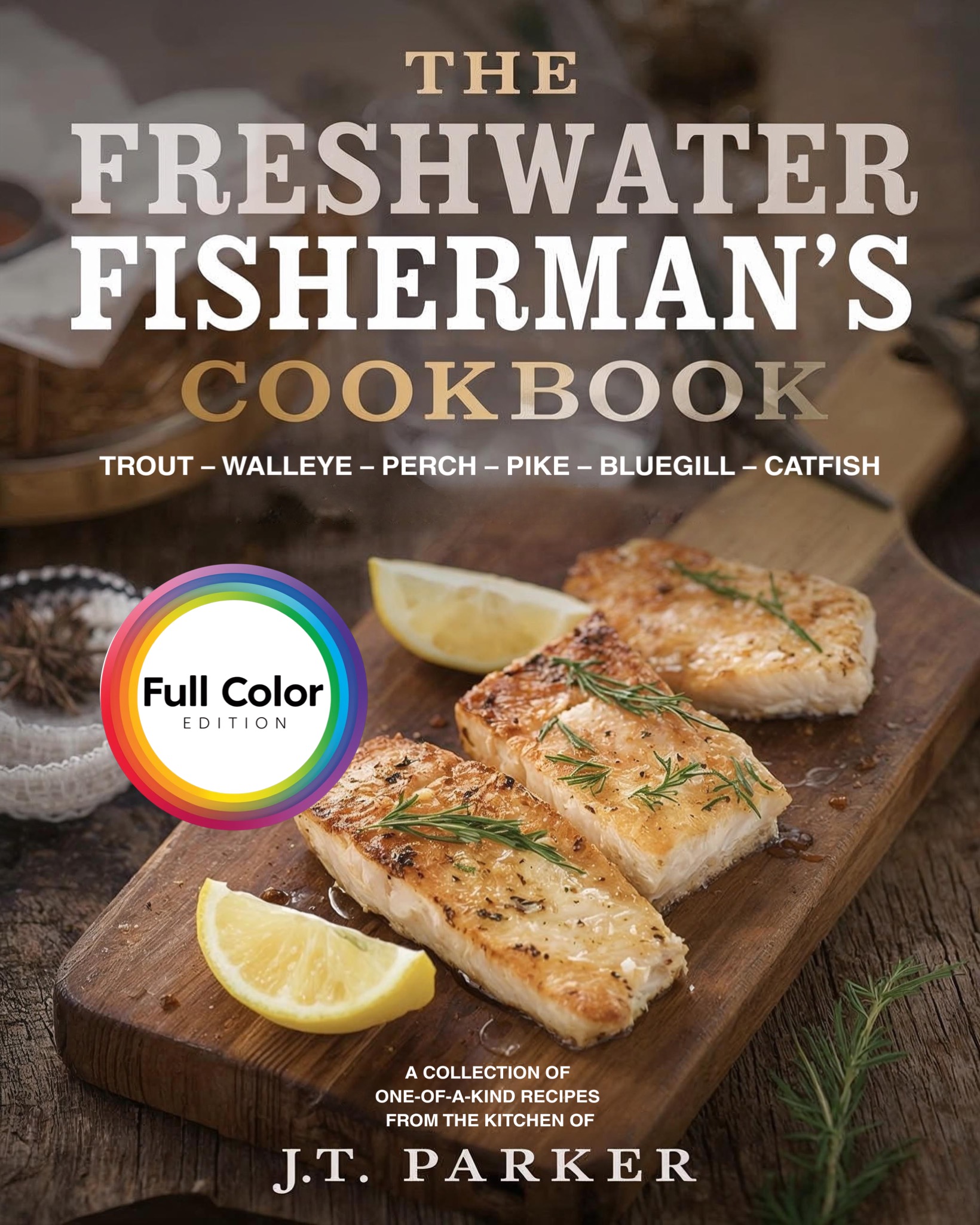
30 recipes covering all six species in this guide — trout, walleye, perch, pike, bluegill, and catfish. Grilling, baking, frying, smoking, and more. Full-color photos throughout.
Amazon — $21.99