Six species. One honest ranking. We're judging walleye, yellow perch, trout, bluegill, catfish, and pike on flavor, texture, cooking versatility, and how much effort it takes to get a good meal out of them. The answer might not surprise you — but the reasoning might.
The best freshwater fish to eat is walleye — mildest flavor, firmest texture, most versatile to cook, and almost no bones once filleted properly. Yellow perch is a close second and arguably the most underrated fish on this list. Trout is third and the best choice for grilling whole. Bluegill, catfish, and pike round out the list — all worth eating in the right preparation, even if they require more effort or bold seasoning to shine.
| # | Species | Flavor | Texture | Versatility | Verdict |
|---|---|---|---|---|---|
1 |
Walleye | Best Overall | |||
2 |
Yellow Perch | Underrated Gem | |||
3 |
Trout | Excellent | |||
4 |
Bluegill | Very Good | |||
5 |
Catfish | Good with Bold Prep | |||
6 |
Northern Pike | Worth the Effort |
Walleye earns the top spot almost by default — not because the competition is weak, but because it genuinely excels in every category simultaneously. The flesh is white, firm, and mildly sweet with almost none of the "fishy" taste that puts off non-fish-eaters. It holds its shape when pan-fried, stays moist when baked, crisps beautifully in beer batter, and works in tacos, pasta, chowders, curries, and salads. Almost nothing else in freshwater matches that range.
The Y-bones are the one real obstacle. They're intramuscular bones that branch into the flesh and can't be pulled out — they have to be cut out as a narrow strip down the dorsal side of the fillet. It takes an extra minute per fillet but becomes automatic after a few fish. The full technique is in our walleye filleting guide. Once those are out, you have one of the cleanest, most versatile fillets in freshwater fishing.
Walleye from cold, clear water — the Great Lakes, Minnesota lakes, Canadian Shield — is some of the best-tasting fish you'll eat anywhere, fresh or saltwater. It's not just the best freshwater fish to eat. For many anglers, it's the reason they got into fishing in the first place. All four cooking methods are covered in our complete walleye cooking guide, and 49 recipes are in the cookbook below.
Yellow perch doesn't get nearly enough credit. The flavor is exceptionally mild and slightly sweet — some would argue cleaner-tasting than walleye — with a delicate, fine-grained texture that pan-fries in under 4 minutes. Unlike walleye, perch have no Y-bones, which makes filleting significantly easier and faster. The fillets are small, but that's an asset in the right preparations.
The main limitation is exactly that: small fillets. Perch doesn't work for every preparation the way walleye does. You're not making perch chowder or perch kabobs. But for pan-frying and fish tacos, perch might actually have an edge over walleye — the fillet size fits perfectly in a corn tortilla, and the mild flavor takes seasoning beautifully. Our perch tacos with lime crema are one of the best things on this site for a reason.
If you're fishing lakes where both walleye and perch are present, keep the perch. They're easier to clean, faster to cook, and the flavor will surprise you every time.
Trout occupies a different lane than walleye and perch. Where those two are mild and sweet, trout has a more distinctive flavor — mildly nutty, slightly richer, with more fat content than any other species on this list. That fat is what makes trout so good on the grill: it protects the delicate flesh from drying out and bastes itself as it cooks. Our grilled trout with lemon and herbs demonstrates why grilling whole is the definitive trout preparation.
Rainbow trout is the mildest; brown and brook trout have more character. All three smoke beautifully. The main limitation compared to walleye is that trout's delicate flesh doesn't hold up in heavy batters or long braises — it's best prepared simply, where the flavor of the fish itself is the point. Keep it simple and it rewards you. Overcomplicate it and the texture suffers.
Bluegill is the most abundant panfish in North America and, for many anglers, the fish that got them started. The flavor is mild and clean — not quite as sweet as walleye or perch, but genuinely tasty with very little effort. The fillets are small and thin, which means they fry in under 3 minutes total and are almost impossible to overcook if you're paying attention.
It sits at #4 rather than higher primarily because of limited versatility — you're not making bluegill chowder or bluegill curry. The small fillet size restricts its range. But for what it is — a fast, reliable, crowd-pleasing fry — bluegill is hard to beat. Our bluegill tacos with mango and chipotle mayo take the small-fillet limitation and turn it into an advantage: the portioning is exactly right for corn tortillas, and the bold toppings complement the mild fish without overpowering it. Check the fish frying guide for exact timing on thin panfish fillets.
Catfish's #5 ranking will frustrate its fans — and fairly so. In the right preparation, deep-fried catfish in a seasoned cornmeal crust is one of the best things you can eat from fresh water. The dense, meaty texture holds up beautifully under high heat, and the bold earthy flavor pairs perfectly with cayenne, garlic, and smoked paprika. For Southern-style fish fries, nothing on this list comes close.
It's at #5 because that earthy flavor that works so well when fried becomes harder to manage in other preparations, and because the flavor varies significantly based on where the fish was caught. River catfish from cold, clean water is genuinely excellent. Pond-raised catfish can have a muddy, strong taste that requires a pre-soak in buttermilk to bring around. The best results consistently come from wild-caught fish and bold, hot preparations. The freshwater fish cooking guide covers the buttermilk soak and seasoning approaches in detail.
Pike is at the bottom of this list almost entirely because of its bones. The Y-bone structure that walleye has in moderation, pike has in abundance — and they're harder to remove cleanly. On smaller pike, many anglers don't bother and just release the fish. On larger pike (over 5–6 lbs), a skilled filleter can remove the Y-bones with a careful series of cuts, yielding large, clean fillets of genuinely good white fish.
The flavor is firm and mildly earthy — not as clean as walleye, but nowhere near as strong as its reputation suggests when properly handled. The smartest pike preparation sidesteps the bone issue entirely: smoke the fish low and slow, then flake the meat away from the bones and fold it into a cream cheese dip. Our smoked pike dip with cream cheese and dill is the best use of a pike catch for most people — it's crowd-pleasing, genuinely delicious, and transforms the most "difficult" fish on this list into an easy party appetizer.
If you're choosing one species to target for table quality, choose walleye. If you're already on a lake full of perch, keep them — they're better than most people expect. And if you're sitting on a pile of pike with no idea what to do, smoke them and make the dip. You won't be sorry.
Now that you know which fish is worth keeping, the freshwater fish cooking guide covers exactly how to cook each species — which methods work best, how their flavors respond to different preparations, and easy fish dinner ideas for each. For walleye specifically, the complete walleye cooking guide covers all four methods with exact temps and timing.
If you're working with a fresh catch and need a recipe right now, the recipe index has eight recipes across walleye, trout, perch, pike, and bluegill — and the two books below have everything else.

49 walleye recipes covering every cooking method — frying, baking, grilling, tacos, chowders, curries, pasta, kabobs, salads, and more. Full-color photos of every dish.
Amazon — $22.99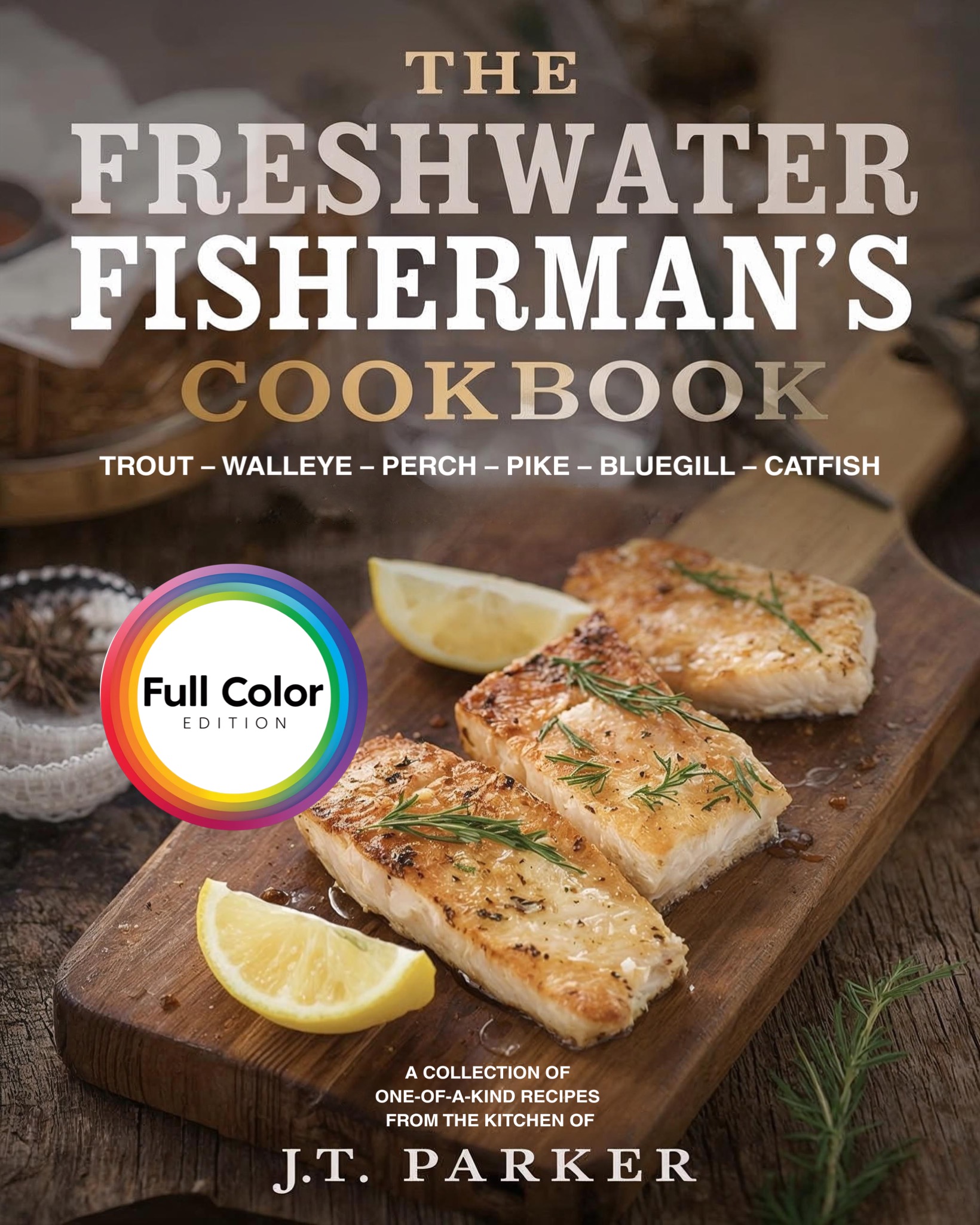
30 recipes across all six species in this ranking — trout, walleye, perch, pike, bluegill, and catfish. Grilling, baking, frying, smoking, and more. Full-color photos throughout.
Amazon — $21.99